


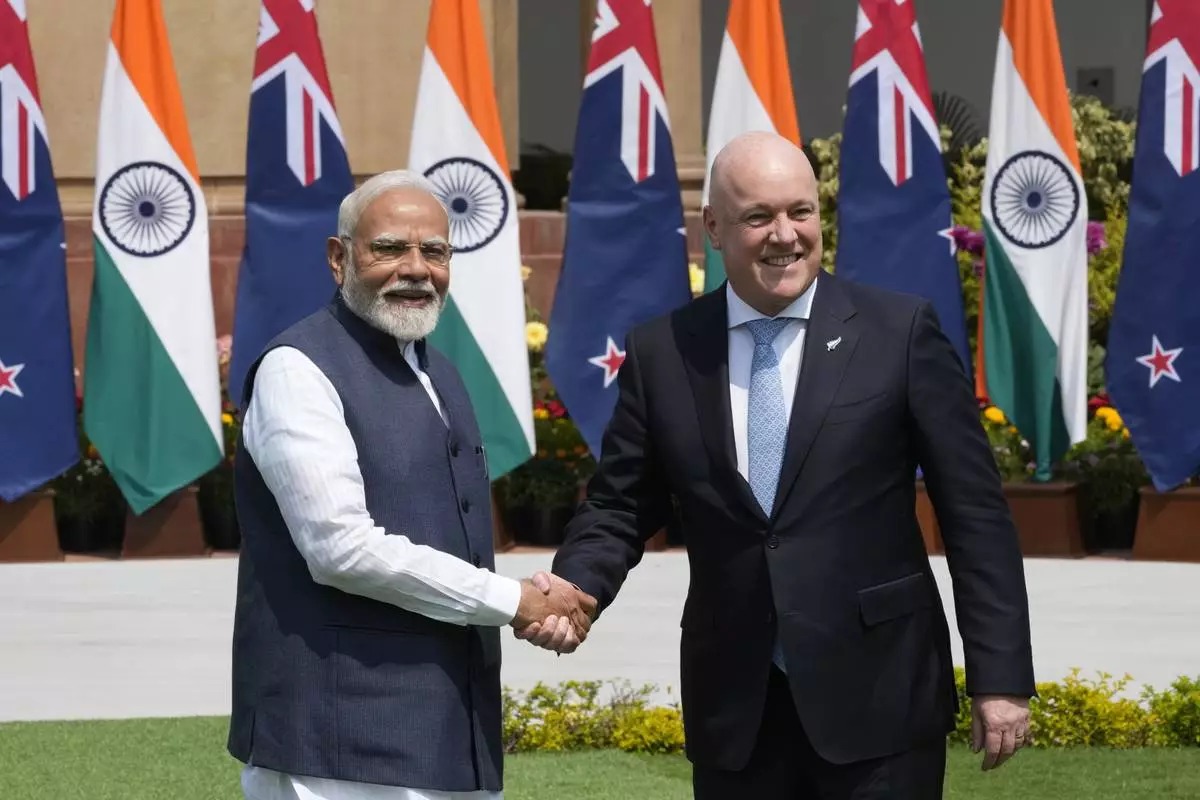
The Negotiations which started in March 16, 2025 between India and New Zealand have now concluded resulting into announcement of a Free Trade Agreement between both the nations. This prominent development was announced after Prime Minister Narendra Modi and his New Zealand counterpart Prime Minister Christopher Luxon had a telephonic conversation on 22nd Dec, 2025.
This FTA is one of the fastest ones of India which started in March 2025. Both the nations see this development as historic, balanced, and beneficial. This will provide both the countries with market access, generate employment opportunities, enhance cooperation in the field of agriculture, tech, education and will mutually benefit both the nations.
Building on the momentum of the agreement, the two sides expressed confidence in doubling bilateral trade over the next five years and projected investments of about $20 billion from New Zealand into India over the next 15 years.
Under the comprehensive, balanced and forward-looking agreement, New Zealand will eliminate tariffs on 100 per cent of its tariff lines, granting duty-free market access for all Indian exports, a move expected to significantly boost India’s export competitiveness and deepen its integration into global value chains. India has offered tariff liberalisation in 70 per cent of tariff lines, covering 95 per cent of bilateral trade.
Commerce and Industry Minister Piyush Goyal said the agreement was about “building trade around people and launching opportunities-for our farmers, entrepreneurs, students, women and innovators.” He added that the pact would boost agricultural productivity and farmer incomes, open doors for Indian businesses in the region and provide Indian youth with global learning and employment opportunities.
The pact will enhance the exports of labour-intensive sectors such as gems and jewellery, textiles, apparels, leather, footwear, agricultural products, marine products, handicrafts, engineering goods and automobile. This will directly benefit the artisans, daily wage workers, gig workers, womens, youth and MSMEs.
Through this pact New Zealand aims to invest in the professional sectors like the IT, AI, health and education. A new Temporary Employment Entry Visa pathway will allow up to 5,000 Indian professionals at any given time to work in New Zealand for up to three years, covering professions such as AYUSH practitioners, yoga instructors, Indian chefs and music teachers, as well as high-demand sectors including IT, engineering, healthcare, education and construction.