

Local Regulation Is Shaping Growth More Than Global Trends! Hmmm!
"Everyone talks about global trends. The real growth decisions are being made at the ministry level." By Ms. Jagriti Pandey (PhD Scholar) Project Lead - Futurex Trade Fair and Events Pvt. Ltd.

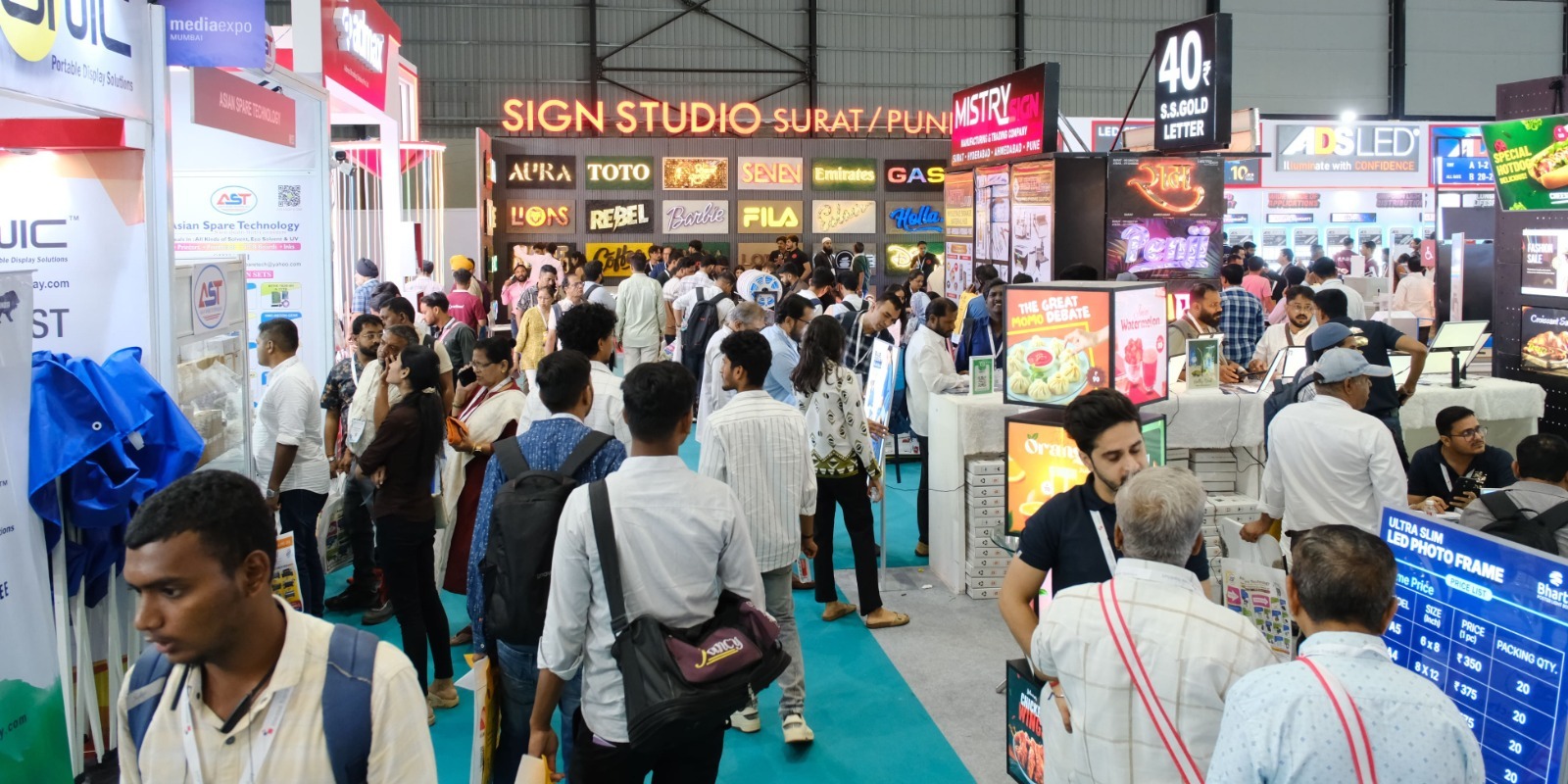
 According to The Business Research Company’s Exhibition Global Market Report 2026, the global exhibition market is projected to reach USD 74.65 billion this year, advancing toward USD 92.7 billion by 2030 at a compound annual growth rate of 5.7 percent. On paper, this trajectory suggests broad and shared prosperity across markets. The reality, however, is considerably more uneven. Growth is not distributed according to legacy reputation, venue quality, or the depth of an organiser’s brand portfolio. It is distributing itself according to the deliberateness with which governments have chosen to treat the exhibition industry as an instrument of economic policy rather than a commercial activity to be accommodated at the margins. The markets that understood this distinction early are accelerating. Those that did not are defending ground they once considered permanent.
→ Global market: USD 74.65B in 2026, forecast USD 92.7B by 2030 at 5.7% CAGR. Asia-Pacific holds ~43% of global revenue, growing at nearly 9% annually.
The divergence is sharpest at the regional level. Fundamental Business Insights’ Exhibition Market Statistics report places Asia-Pacific at approximately 43 percent of global exhibition revenue in 2025, with the region forecast to grow at 8.7 percent annually through 2035, the fastest of any geography in the world. Mordor Intelligence puts India’s exhibition and events market at USD 6.15 billion in 2026, forecast to reach USD 9.04 billion by 2031 at a CAGR of 8.05 percent. In the Gulf, WTM and RX Global’s industry briefings project Saudi Arabia’s MICE sector to exceed USD 5.5 billion by 2031, with Riyadh actively positioning itself as a rotational destination for events that previously considered only Frankfurt, Chicago, or Milan viable venues. The picture at the other end is equally telling. The UFI Global Exhibition Barometer, published in February 2026, reveals that only 8 percent of US exhibition companies expect operating profits to grow by more than 10 percent this year, against a global average of 33 percent a gap that reflects something structural, not cyclical. Germany retains its position as the world’s trade show capital by heritage, but the competitive environment requires it to work considerably harder to hold events it once attracted without contest.
→ India: USD 6.15B (2026) → USD 9.04B (2031). Saudi MICE: projected to exceed USD 5.5B by 2031. US firms forecast strong profit growth: 8% vs. 33% global average.
The most immediate and most consistently underestimated lever in this competitive dynamic is visa policy. Global Market Insights identifies visa complications and travel restrictions as a recurring, documented deterrent to international exhibition participation, not a theoretical concern, but a practical reason why qualified buyers skip shows and why certain markets find their exhibition calendars structurally constrained regardless of venue quality. The United Arab Emirates has moved with clarity on this front. Following its introduction of a dedicated event visa category covering conferences, exhibitions, festivals, and formal gatherings, the UAE government, responding to arrival headwinds from European and North American markets in early 2026, further accelerated its e-visa rollout, launched airline incentive programmes to restore routes, and deployed event tourism calendars as demand-generation instruments, as reported by Travel and Tour World. Saudi Arabia, meanwhile, extended its e-visa regime to a broader range of nationalities and maintained its 96-hour stopover visa mechanism, a tool, as Mordor Intelligence documents, specifically designed to convert transit traffic into short-stay business delegates who attend events, hold meetings, and return home with commercial relationships. Visa policy, designed and deployed with intention, is not an administrative function. It is a demand generation strategy.
→ UAE: dedicated event visa category; e-visa fast-tracked following early-2026 arrival declines. Saudi Arabia: expanded e-visa regime and 96-hour stopover visa as a business events tool.
Government subsidy frameworks represent the second structural dimension where competitive asymmetry has become most pronounced. RX Global’s published industry data confirms that in 2024, 237 RX-managed events worldwide were approved for Chinese government support, enabling Chinese companies to participate in overseas trade shows at subsidised stand costs of between 70 and 100 percent. In early 2026, China Briefing, citing a joint notice from China’s Ministry of Finance and State Taxation Administration, reported that import tax incentive packages explicitly covering international trade exhibitions were extended through the end of the 15th Five-Year Plan period in 2030, effective January 2026. A competitor from a non-subsidised market standing on the floor of the same international trade show is not competing against another commercial exhibitor. They are competing against a national export strategy expressed through exhibition attendance. The Gulf mirrors this logic domestically. Vision 2030 sector reporting confirms that Saudi Arabia’s 588 million SAR incentive programme, approximately USD 156 million, has moved from announcement to operational deployment in 2026, with measurable rotation of international organiser interest toward Riyadh. KPMG’s Hong Kong Budget Summary 2026–27 documents the Hong Kong government’s allocation of HKD 100 million specifically to attract international large-scale exhibitions of new thematic categories, alongside preferential tax packages carrying rates as low as 5 percent for targeted industries. These are not marketing budgets. They are industrial policy instruments.
→ China: 70–100% government subsidy on overseas stand costs across 237 events (2024); exhibition tax incentives extended through Dec 2030. Saudi Arabia: 588M SAR (~USD 156M). Hong Kong: HKD 100M fund + 5% preferential tax rate.
Infrastructure investment follows subsidy commitment, and the compounding effect of both produces a competitive repositioning that operates across years rather than event cycles. Mordor Intelligence documents Dubai’s USD 2.7 billion expansion of Expo City’s exhibition complex, advancing toward phased completion by 2031, alongside parallel venue development programmes in Beijing and Riyadh that are increasing gross floor area and reducing per-square-meter costs. These investments make it commercially rational, not merely aspirationally attractive for global organisers to shift rotation schedules away from historically congested Western exhibition centers. Business Research Insights notes that India’s total exhibition area of approximately 7.3 million square meters remains around 5 percent of China’s comparable space, a figure that is now characterised as an investment opportunity rather than a permanent limitation. The India International Convention and Expo Centre is operational, and the country’s exhibition sector is forecast by EXPOSALE, drawing on UFI data, to grow at 10 percent annually in 2026. Global Market Insights points to the TFWA Asia Pacific Exhibition and Conference at Marina Bay Sands in May 2026 as emblematic of how thoroughly the region has institutionalised the conditions, infrastructure, access, and state support that make it the preferred default for global organisers evaluating rotational schedules.
→ Dubai: USD 2.7B Expo City expansion by 2031. India exhibition area: ~7.3M m², ~5% of China’s scale. India sector: 10% annual growth forecast in 2026.
Tax structures occupy the quietest corner of this competitive landscape, yet their cumulative effect on organiser economics and exhibitor return on investment is substantial. The Exhibitions and Conferences Alliance, as reported through IAEE communications, has described tax reform as the defining policy priority for the US industry in 2026, with the principal objective being the defense of existing conditions rather than the pursuit of new advantage: protecting the tax-exempt status of nonprofit associations and resisting changes to the private equity treatment of small exhibition businesses. The UFI Global Exhibition Barometer reinforces this picture, with more than half of US exhibition companies citing geopolitical and macroeconomic concerns, including the downstream effects of current US trade policies, as their most significant short-term challenge. This is the profile of an industry managing exposure, not one backed by active government promotion. The contrast with Hong Kong’s 5 percent preferential tax packages, as documented by KPMG, and the Gulf’s ongoing deployment of tax holidays and financial incentives, as detailed in Vision 2030 sector analysis, could not be starker. Some markets are using tax policy to actively attract exhibition business. Others are using advocacy to protect conditions from further erosion.
→ US: majority of firms cite geopolitical and trade policy risk as primary 2026 challenge. Hong Kong: 5% preferential tax rate + direct exhibition funding. Gulf: tax holidays deployed as active demand tools.
Taking in aggregate, these policy dimensions, visa access, subsidy frameworks, infrastructure investment, and tax environment, compose a competitive architecture that determines whether a market captures the growth that global commercial demand makes available, or watches it flow elsewhere. The UFI Global Exhibition Barometer, published in February 2026, confirms that industry-wide momentum is genuine: 47 percent of companies globally increased rented space by more than 5 percent year-on-year, 31 percent grew operating profits by more than 10 percent, and 39 percent plan to increase staff numbers through the year. But aggregate momentum obscures a structural divergence at the market level. Growth is flowing toward markets whose governments made a clear and sustained decision expressed through visa reform, subsidy deployment, infrastructure funding, and tax incentives that exhibitions represent a strategic economic asset. It is flowing away, quietly and persistently, from markets that left the industry to compete on the strength of its own talent and tradition. The global trend is opportunity. The local regulation is what captures it.
→ UFI Barometer Feb 2026: 47% of firms increased rented space >5% YoY; 31% grew profits >10%; 39% plan headcount growth. Market: USD 74.65B (2026) → USD 92.7B (2030).
The global trend is opportunity. The local regulation is what captures it.