

India’s Paper Industry Accelerates Growth and Circularity at Paperex 2025 with Over 700 Exhibitors and 33,000 Trade Visitors
• Paperex 2025 by Informa Markets in India highlights India's sustainability push with recycled fibre now contributing 68% of total paper production. • Sector momentum strengthens as packaging demand reaches 15 million tonnes, growing at 8–9% annually. • 4-day expo champions circularity, technology trends and green manufacturing with the India Innovation Pavilion, seminars by the World Paper Forum, and New Trends & Technologies Conference.

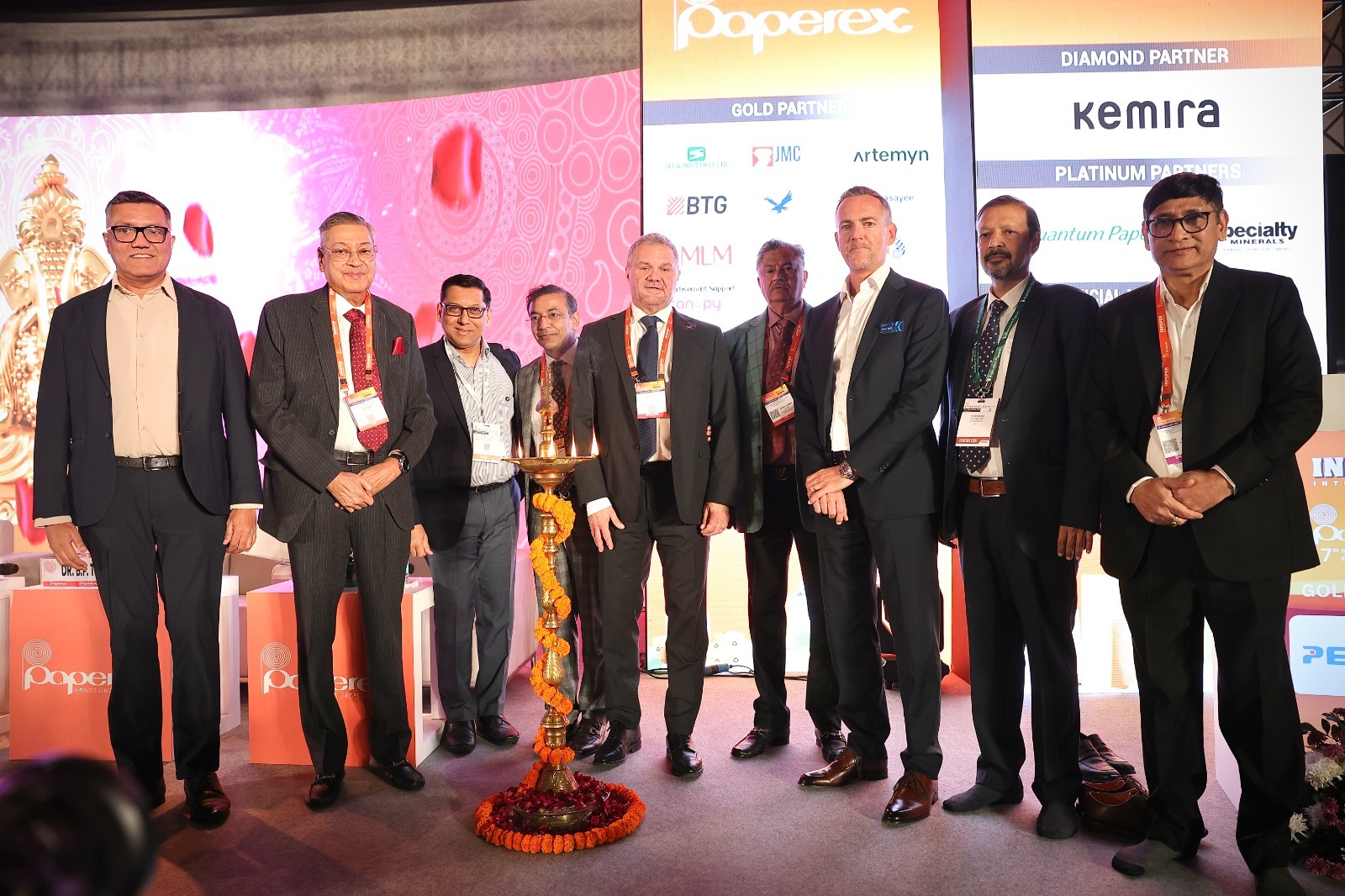
New Delhi, 3 December 2025: The 17th edition of Paperex 2025 opened today at Yashobhoomi (IICC), Dwarka, reaffirming its position as the world’s largest and most comprehensive platform for the pulp, paper, packaging, and allied industries. Celebrating a legacy of over 30 years, this edition brought together 675 leading exhibitors from 28 countries and welcomed more than 33,000 trade visitors, strengthening Paperex’s role as the definitive gateway to India’s fast-growing paper market.
Organised by Informa Markets in India in collaboration with IARPMA and supported by the World Paper Forum, Paperex continues to unite global leaders, technology innovators, manufacturers, and policymakers for four days of live demonstrations, knowledge sharing, and discussions shaping the future of sustainable and technology-driven paper production.
The inaugural ceremony was graced by esteemed Mr. Pavan Khaitan, President, Indian Pulp & Paper Technical Association (IPPTA). Shri Shripad Yesso Naik, Hon’ble Union Minister of State for Power, and Minister of State for the Ministry of New and Renewable Energy, Government of India, also joined the ceremony virtually. Adding to the occasion were presidents of leading paper associations and high-level dignitaries, including Mr. Pawan Agarwal, President, Indian Paper Manufacturers Association; Mr. Rahul Khanna, President, Indian Newsprint Manufacturers Association; Mr. Mikael Forslund, President & CEO, Elof Hansson Group, Sweden; Mr. Pramod Agarwal, President, Indian Agro & Recycled Paper Mills Association; Mr. Peter Hall, President, IMEA, Informa Markets; and Mr. Yogesh Mudras, Managing Director, Informa Markets in India. Their presence highlighted the industry’s collective commitment to innovation, sustainability, and collaborative growth.

Shri Shripad Yesso Naik, Hon’ble Union Minister of State for Power, and Minister of State for the Ministry of New and Renewable Energy, Government of India , said “Paperex marks a pivotal platform for the global paper industry, and at the time when many sectors face financial stress, the Indian paper industry stands out as a strong, adaptable, and sustainability-driven example—advancing quality, innovation, energy efficiency, and responsible resource management. The industry’s achievements under the PAT scheme reflect its balanced focus on growth and energy security. With demand rising 7–8% annually
and production capacity expected to expand from 24 million tonnes to 32 million tonnes by 2030, the sector continues to play a vital role in rural employment, MSME development, packaging, education, and social progress. Its shift toward renewable energy, reduced fossil-fuel dependence, and long-term carbon-neutrality strategies further strengthens India’s environmental leadership. As we work toward the vision of a developed India by 2047, innovation, digitalisation, recycling, and global collaboration will shape a competitive and self-reliant industrial ecosystem. This conference will undoubtedly open new pathways for knowledge, cooperation, technology advancement, and sustainable growth.”
Mr. Pawan Agarwal, President, Indian Paper Manufacturers Association, said,”The paper industry today utilizes nearly 25% to 50% bamboo in its total wood-pulp mix, a significant rise enabled by the Union Government’s decision to deregulate bamboo transportation from the northeastern states. This policy shift has not only strengthened raw material availability for mills but also boosted the local economies of the region through enhanced bamboo supply. In parallel, the government’s move to allow farmers to freely grow and harvest designated tree species many of which are used by paper mills has encouraged sustainable agroforestry practices. These combined reforms have created a more reliable, farmer- inclusive, and environmentally responsible raw material ecosystem for the paper sector.”
Mr. Rahul Khanna, President, Indian Newsprint Manufacturers Association, said “The global landscape for the paper industry has entered a phase of heightened unpredictability, where volatility has replaced the earlier cycle of good, average, and challenging periods. In the past six months alone, the industry has witnessed unprecedented fluctuations, intensified further by issues such as overseas dumping and rapidly shifting market dynamics. Sustaining the sector in this environment requires continued advocacy, strong policy support, and a collective focus on long-term resilience. Encouragingly, the industry is responding with significant technological advancement and a growing influx of young professionals, an essential shift for driving innovation and future-readiness. As conditions evolve, embracing cutting-edge technology and nurturing new talent will remain central to navigating this new normal.”
Mr. Pramod Agarwal, President, Indian Agro & Recycled Paper Mills Association, said “The Indian paper sector comprises nearly 800 mills, of which around 200 currently remain non- operational due to policy-related challenges, including GST implications and restrictions on imported waste paper. Given its strong rural footprint linking farmers, local communities, and an extensive labour base of nearly 5,000 direct and indirect workers per mill—the industry plays a critical role in rural livelihoods and employment generation.
As India continues to face a fibre shortage, agroforestry-based production using agricultural residues such as bagasse, sarkanda, wheat straw, and rice straw has become essential.
Instead of crop burning, farmers are encouraged to supply this biomass, creating both environmental and economic benefits. However, domestic waste paper collection remains limited to nearly 50%, far below levels seen in developed economies where recovery rates reach 90%. This gap compels the industry to import close to 10 million tonnes of waste paper annually. Strengthening fibre collection, reducing import dependence, and
fostering enabling policy support are vital for the long-term sustainability and competitiveness of the Indian paper industry.”
Mr. Pavan Khaitan, President, Indian Pulp & Paper Technical Association (IPPTA), said “The global paper and pulp industry is entering a defining phase, one driven by decarbonization, circularity, e-commerce growth, and rising hygiene awareness. As brands and nations redesign value chains around renewable, recyclable and low-carbon materials, paper and fiber-based solutions are emerging at the centre of sustainable growth. India stands uniquely positioned in this transition with a resilient economy, rising consumption, strong recycling systems and rapid technological adoption across mills. Packaging, tissue, specialty grades and recycled-fiber innovations are reshaping demand, while digital mills, AI-enabled quality systems, barrier coatings and energy-efficient technologies are setting new competitive benchmarks.
With global partners converging at PaperX 2025, the industry’s priorities for the next decade are clear, lead in sustainable packaging, strengthen fiber security and circularity, and accelerate modernization and talent development. Paper has always symbolized knowledge and progress; today, it also represents responsible growth and material circularity. This is India’s moment to shape global standards in sustainable paper and packaging.”
- Gopalratnam, Chairma, Seshasayee Paper and Boards Ltd, said, “The Indian paper industry has undergone a remarkable transformation, with farm forestry and large-scale plantation initiatives now meeting nearly 90–95% of the nation’s wood requirements, an achievement unmatched by any other global market. Despite rising raw material costs affecting international competitiveness, this progress in sustainable tree farming and fiber security stands as a defining hallmark of India’s manufacturing strength.Circularity, often seen as a modern concept, has been deeply embedded in the industry for decades through integrated models linking agriculture, sugar mills, and paper production, demonstrating how resource efficiency has long been part of India’s industrial ethos. While per capita paper consumption remains modest at 15–16 kg, this gap represents significant future potential. With strong scientific capabilities, technological advancements, and a resilient production ecosystem, the industry is well-positioned to overcome current market pressures and chart a path of steady long-term growth. Sustained optimism, collaboration, and innovation will continue to shape India as a global leader in sustainable paper and fiber-based solutions.”
Mr. Mikael Forslund, President & CEO, Elof Hansson Group, Sweden, said “The global paper and pulp industry stands at a crucial turning point, where rising demand for packaging, tissue, and hygiene products must be balanced with responsible resource use. Innovations such as fiber-based packaging, recyclable composites, circular material recovery, and clean- water technologies are redefining sustainability across the value chain. India’s scale, resilience, and rapid adoption of new technologies further strengthen this transition. As the industry advances, collaboration and transparent partnerships will be essential to ensure that growth remains sustainable, resource-efficient, and aligned with the long-term needs of society.”
Mr. Peter Hall, President, IMEA, Informa Markets, said “PaperX
2025 marks the 17th edition of the show and the very first to be organised under Informa Markets, following the successful acquisition of Hyve India earlier this year. This transition has strengthened the event’s global scale and industry impact, bringing together over 700 brands from 27 countries at a time when the paper, pulp, tissue and packaging sectors are undergoing rapid transformation. As sustainability expectations rise and technology reshapes manufacturing, India continues to emerge as a key engine of growth for the global industry. PaperX remains a vital platform for addressing shared challenges from raw material volatility to competitiveness while enabling collaboration, innovation and investment. Even in an increasingly digital world, paper, packaging and tissue continue to be essential to everyday life, and PaperX 2025 reflects the sector’s collective commitment to a smarter and more sustainable future.”
Mr. Yogesh Mudras, Managing Director, Informa Markets in India, said, “The paper and packaging industry is being transformed by innovation, sustainability, and India’s rapidly expanding demand landscape. This sector demonstrates exceptional circularity — recycling nearly 68% of all materials while investing steadily in sustainable forestry and carbon-neutral processes. With consumption expected to reach 23.5 million tonnes in 2024–25, India’s per- capita usage of 15 kg remains significantly below the global average of 57 kg, presenting immense growth potential. The market’s projected growth to USD 16.64 billion by 2028 underscores this momentum.
Paperex 2025, enhanced by initiatives like the ‘New Trends & Technologies’ conference and the India Innovation Pavilion, plays a pivotal role in accelerating this progress. These platforms bring global advancements and sustainable solutions to the forefront while enabling business opportunities, joint ventures, and technology transfer that collectively shape the next chapter of India’s paper industry,” he added.
On Day 1, the conference opened with a keynote on “Sustainable Growth of Paper, Paper Packaging, Tissue and Allied Industries”, followed by a CEO-round panel. Further, a session deep dive into “Emerging Alternate Fibre & Raw-Material Sustainability,” exploring scalable alternate fibres, financing models, and responsible value-chains.
Day 2 will shift focus to ‘Paper and Packaging: Market Dynamics, Growth and Value Chain Integration’, ‘Harnessing Technology, Fillers and Chemical Solutions for Sustainable Productivity’, followed by technical sessions on ‘Innovative Pathways in Paper Packaging, Engineering Efficiency: Transforming Equipment and Process Productivity’.
On Day 3, sessions will cover ‘Best Practices, Soft Solutions, Strong Impact: Mill Experience & Innovation in Paper & Tissue Production’, ‘Environmental Crossroads: Challenges in Today’s Environmental Landscape’, addressing eco-friendly waste disposal and environmental protection, sustainable paper-making journeys by mills, advanced pulping & calendering techniques, tissue-manufacturing innovations, decarbonization strategies, chemical recovery processes, and environmental challenges including perspectives from mills in river-belt states, circularity for process felts, and development of eco-friendly archival paper from regional raw materials.
Finally, Day 4 will be dedicated to a poster session showcasing
“Emerging Technologies, Innovations, Start-ups and Novel Ideas” with contributions from young scholars, scientists, institutes, entrepreneurs, and start-ups across pulp, paper, packaging, tissue and allied sectors. This will provide a platform to surface future-oriented research, sustainability-driven product ideas, and early-stage innovations.
Leading industry players included JK Paper, TNPL, Trident Group, BILT Graphic Paper, APRIL Fiber Resource, Andhra Paper, Orient Paper, and West Coast Paper participated, representing the complete spectrum of paper production and conversion.
Festivity of Business: A Billion Strong. Celebrating Business. Powering Trillion-Dollar Opportunities
Informa Markets in India celebrates the 6th edition of the Festivity of Business—a 100-day campaign encompassing 28 high-profile events including 16 expos, 5 conferences, and 7 awards shows across the country till the end of the year. In an era of shifting global headwinds, India stands as a strategic engine of growth with 1.4 billion people and an economy projected to reach $5 trillion by 2027. As India’s leading business enabler, Informa Markets in India embodies the essence of relationships and collaboration that also define the country’s vibrant festivals. The Festivity of Business campaign aims to transform exhibitions into celebrations of unlimited potential as it connects visionaries and industry leaders to shape tomorrow’s economic landscape.