

Positioning India as Asia’s Next Convention Powerhouse: Chander Mansharamani on Convention India Conclave
In this exclusive cover interview with TradeFairTimes, Mr. Chander Mansharamani, Vice Chairman, India Convention Promotion Bureau (ICPB), shares his vision for the upcoming Convention India Conclave and explains how it can evolve into one of Asia’s most prominent business events platforms. He discusses the Government of India’s schemes and support mechanisms for attracting international conferences, the biggest growth opportunities for India’s MICE sector, key infrastructure and policy priorities, and the challenges that must be addressed to position India as a leading global convention destination.

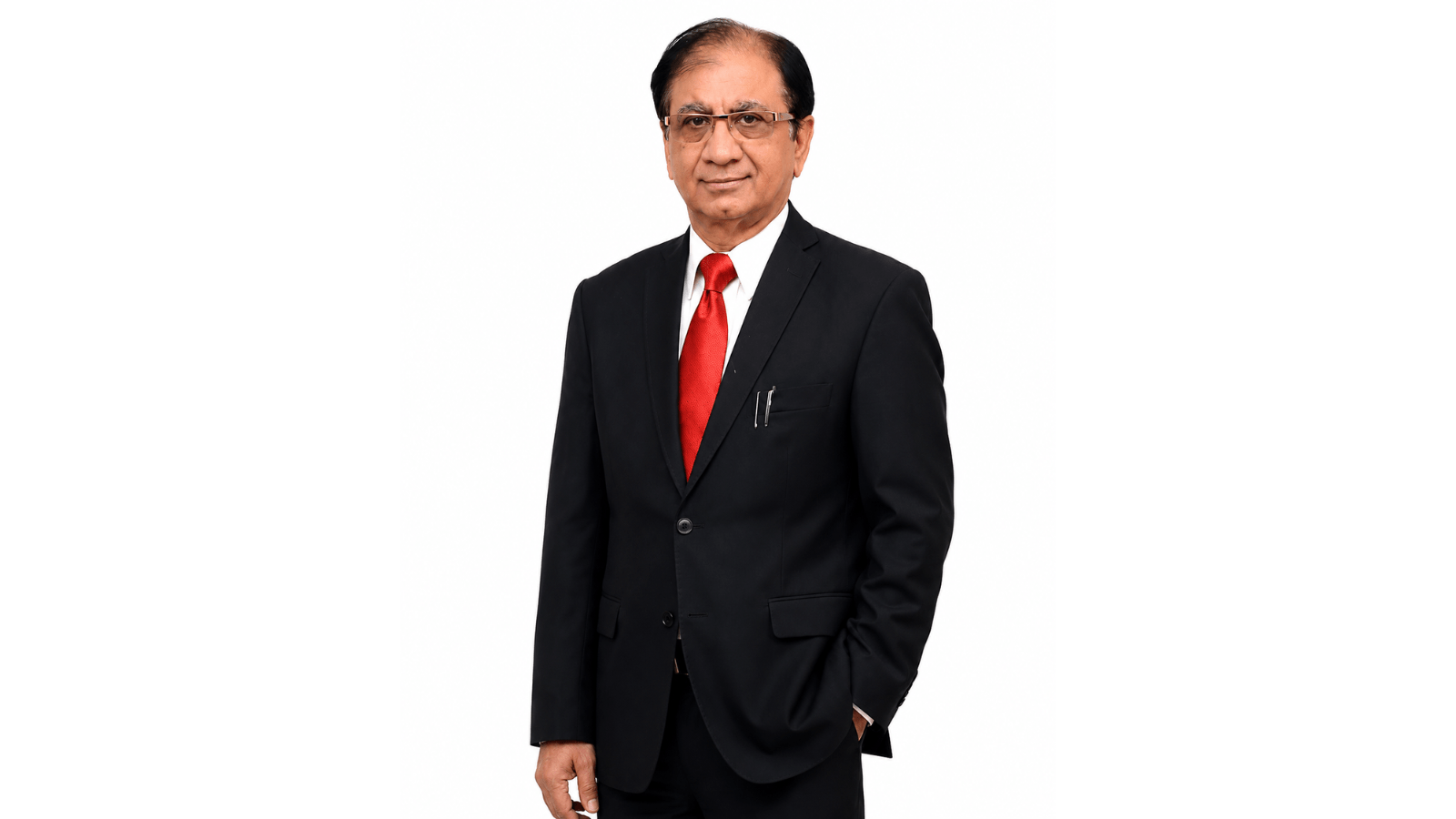
“We have to Convey the message that India is Quite Capable Today of Holding Conference of Any Size”
TFT: Convention India Conclave (CIC) has established itself as India’s premier platform for the conventions and meetings industry. How do you envision its evolution over the next five years?
CM: It’s not five years, we have made a target of three years now. There should be a signature event of MICE industry in India where gradually we are going to make it more of an international one. Many players across the world have kind of year after year the same event, in the same month, same city. So international participation is also there, so here also we are making it in 3 years time, we want to make it as Asia’s preferred MICE destination.
TFT: India has made significant investments in convention centres, airports, hospitality, and urban infrastructure. Do you believe the country is now well-positioned to compete with leading global convention destinations such as Singapore, Dubai, and Bangkok?
CM: As far as the infrastructure wise we are quite competent now, we have excellent infrastructure now like Yashobhoomi, Bharat Mandapam, IEML in Noida, Jio World Convention Centre in Mumbai, HITEX in Hyderabad. So as far as the connectivity is concerned which is the main reason of people coming into any country, connectivity is there, infrastructure is there other growth connections are there so infrastructure wise we are quite competitive now except we have to form a policy on incentivisation because most of these countries like Singapore, Bangkok, Dubai you are talking about they do a lot of incentives to the conference organisers to come to their country. So that policy we need today to work on getting business in India.
TFT: India’s experience economy is growing rapidly and is expected to become a major contributor to the country’s economic growth. What role do you see the convention and business events industry playing in this transformation?
CM: Transformation comes in when you go for a more infrastructure in the sense that you build more convention centres like take an example of Yashobhoomi which is in Dwarka where there were 3 hotels but they were never occupied, never had any good business and now the whole area is developed. In the sense there are golf courses coming in, there are more hotels coming in, there are sports centres coming in, so take five years time the whole area will be developed into kind of a convention city so that will definitely going to help us in the economy of the country. I’m not talking only about Dwarka, in Nagpur also the same kind of thinking is there with the Maharashtra government, Jaipur is also trying to work it out like the Bharat Mandapam. So various state governments are identifying particular area to develop as in a convention city as such. The economic growth will be there by holding the conferences there, the hotels will do their own business, the malls will do their own shopping business, convention centres will have their own business definitely it’s going to help the economy of the country.
TFT: What are the biggest opportunities for India in attracting international association congresses, corporate conventions, and incentive travel programmes over the coming decade?
CM: You see the biggest opportunity for India is the knowledge economy. Having so many IIMs, IITs, is you know kind of prominent thing in the world. Look at the medical area, the doctors that is one area. Then the science and then medical and then technology then IITs, IIMs who can bit for the conference so that is the advantage that India has.
TFT: Despite India’s growing capabilities, the country still misses out on several international convention bids. What, in your view, are the key challenges that need to be addressed?
CM: The challenge is only the incentivisation. When the conference organisers bit for the conference, one is that the scheme the Ministry of Tourism has for which they assist financially to the conference organisers for bidding for the international conference which is not there now. So the bid has to come in again that is a challenge where we need to have some kind of a financial assistance to the people who can bid for a conference that is one, and second is once you bid for a conference, a part of bidding should be the incentivisation of the conference also. So these are the two challenges we face.
TFT: How is ICPB collaborating with the Government of India, state tourism boards, convention centres, and industry stakeholders to strengthen India’s position as a preferred global meetings destination?
CM: They are already there, they are our members, ICPB is under the India’s Ministry of Tourism and then there are members of our boards, members of the convention centres. We have already come together to market India as a global event destination. Then what we do is how we collectively altogether go abroad and market by participating in international trade shows, roadshows abroad, so we all go together and then we can make India as a preferred convention destination.
TFT: The successful hosting of the G20 meetings showcased India’s ability to deliver world-class events. How has this enhanced India’s credibility and competitiveness in the global MICE industry?
CM: We had a very big advantage of G20 where even the Prime Minister’s office also says that the reason we had around 60 events across India during the G20 because G20 was not held in Delhi only. It was held in every state, so there were 60 venues. The purpose of doing this choosing 60 venues for G20 was to promote MICE where we wanted to showcase to the world that yes there’s not only Delhi, Bombay or the capital cities but even 2 tier cities we are capable of doing the MICE events in 60 cities. So that was a very successful kind of campaign.
TFT: Several Tier-II and Tier-III cities are developing modern convention infrastructure. Which emerging destinations do you believe have the greatest potential to become future convention hubs, and why?
CM: It is not only the convention centres, it is the connectivity and it is the other areas like there are 2 – 3 things here like I will give you an example of Khajuraho. Khajuraho has a good convention centre of say 1,500-2,000 people, we had gone to inaugurate that but there is only 1 flight to Khajuraho in a day. So these tier II and tier III cities have to realise it is not that having a convention centre they can develop, getting the business for the convention centre they need to develop all inclusive where everything has to come together to promote this. So the tier II and III cities have to work on the infrastructure anyways they are building the convention centres but then the connectivity and other areas of convention have to be simultaneously work on it. Potential to become a future convention, whosoever comes in a lot of states are coming up now like Pune is coming in, Nagpur is coming in Maharashtra. Then if you look at around Delhi, Mohali a new convention centre is coming up, Jaipur again Mandapam is coming up there, Vishakhapatnam I’m interacting with people there, there will be a big convention centre in Vishakhapatnam. So tier II and tier III cities are coming up with the infrastructure now the only thing what we are advising them is to have inclusive thing what you require in a convention business.
TFT: Artificial Intelligence, smart venues, digital engagement, and data-driven event management are transforming the industry. Which technological trends do you believe will define the future of conventions and business events?
CM: One is that artificial intelligence has to do with the operational side, it’s nothing to do with the competitiveness kind of thing. Smart venues, digital engagement and data driven event management is the key actually for transforming the industry. So smart venue has to be there in a sense when the people come in there they should feel how they are in a venue when they come in and then the seamless experience when they are working there in the venue that is what they require. Digital engagement is basically the communication. Artificial intelligence is that one can use it into many areas like communication, digital marketing even mining the data also to be more competitive.
TFT: What policy initiatives, incentives, or structural reforms would you like to see from the Government to help India attract a larger share of international conventions and business events?
CM: See one is that they should have a MICE policy in place now. Part of that will be how they are going to go about the incentivisation of the international conferences, incentivisation of the financial assistance to the local conference organisers who can go and bid for a conference so the policy should be in place at the moment like the participation into international trade shows abroad, having a roadshow abroad, this is one of the part of the policy what they need to work on it like they need to have some kind of what we have been asking them to make ICPB as in a central agency to market India for bringing more conventions to India. Recently another policy which is very appreciable is that the Government of India’s initiative is to try encourage the State Governments to form the Bureaus. So they are working on because the bureaus are the ones who can go and bid for the conference and then bid the conference for the particular state so that initiative the Ministry of Tourism has taken as a part of the policy as such where policy has not been framed but then they have taken initiative to telling the governments to go and form a Bureau and market their own state to bring the international conference to their own states. So these are the policies what we are looking at.
TFT: Looking ahead to 2035, what is your vision for India’s convention industry, and what message would you like to share with global event organisers and associations considering India as their next destination?
CM: One is that we have been talking about is that we have to convey the message to them is that India is quite capable of today holding conference of any size, Second what we are saying is that infrastructure means local connectivity is there, convention centres are there, we are quite today equipped with all that we need. One more thing what I have been talking about is the knowledge economy where we have the science with us, the technology with us, in the technology we are known in the world, in space we are also known in the world, with the medical we are known in the world. What my vision is to we try these things to bring in more conferences into India.