


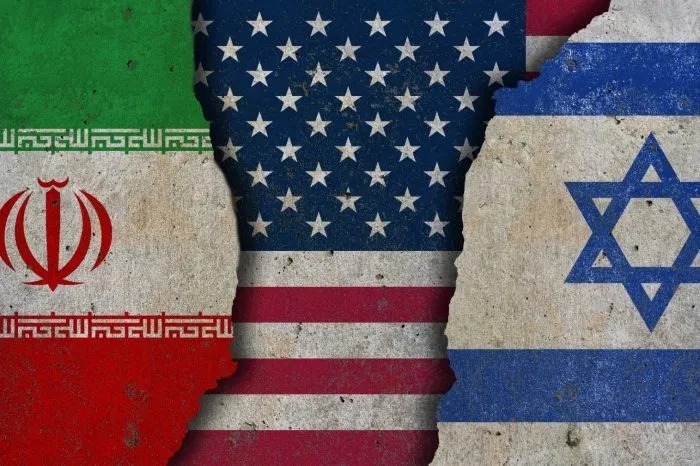
As the Middle East conflict reshuffles event calendars, international organisers are quietly asking where else to build. ASEAN and India are on the shortlist, but the story is more complicated than a simple move east.
For a decade, the Gulf was the exhibition industry’s most reliable growth story. Venues rose, global brands arrived and calendars filled. In 2026, that confidence has been tested.
The continuing regional conflict has pushed several flagship shows out of their 2026 slots and raised hard questions about international participation. For organisers, venue operators and contractors, the question is no longer only when events will return. It is how much of their business should depend on any single region.
This is not a story of exhibitions packing up and relocating. It is a story of exposure being reconsidered.
The Gulf: A Disrupted Calendar, Not a Dead One
Dubai, Abu Dhabi, Riyadh, Jeddah, Doha and Bahrain have invested heavily in venues, convention infrastructure and event acquisition. Saudi Arabia’s Vision 2030 accelerated that expansion, and Dubai cemented its role as a meeting point for trade, finance, technology and manufacturing.
The 2026 conflict has dented that ecosystem. Several prominent shows have moved to 2027 or later:
|
Exhibition |
Destination |
Revised schedule |
|
Automechanika Riyadh |
Riyadh |
January 2027 |
|
Paperworld Middle East |
Dubai |
September 2027 |
|
Intersec Saudi Arabia |
Riyadh |
October 2027 |
|
Saudi Build |
Riyadh |
November 2027 |
|
Saudi Elenex |
Riyadh |
November 2027 |
|
Bahrain International Airshow |
Bahrain |
November 2028 |
The picture, however, is uneven. ADIPEC, Gulfood Manufacturing, Automechanika Dubai and other November exhibitions are going ahead as scheduled. Disruption has varied by destination, sector and organiser. Postponement is not cancellation, and the Gulf has not left the map.
ASEAN: Many Markets, One Opportunity
ASEAN offers something the Gulf, with its concentration of major venues in a compact geography, structurally cannot: spread. The bloc’s 11 members are Indonesia, Thailand, Singapore, Malaysia, Vietnam, the Philippines, Cambodia, Laos, Myanmar, Brunei and Timor-Leste. Its leading exhibition markets each bring a distinct strength:
- Singapore is an established international hub for technology, financial services, aviation, healthcare, food and specialised industrial shows.
- Thailand has Bangkok infrastructure that serves manufacturing, automotive, machinery, plastics, electronics, food and hospitality.
- Malaysia hosts Kuala Lumpur and other industrial centres, with strength in construction, energy, manufacturing, food and technology.
- Indonesia gives Jakarta access to one of the region’s largest domestic industrial and consumer markets.
- Vietnam has export manufacturing, foreign investment and rapid industrialisation driving demand in electronics, machinery, textiles, food processing and construction.
The region’s appeal is not venue count alone. It is the combination of manufacturing growth, regional sourcing, domestic consumption and trade connectivity. For an organiser, several national calendars mean exposure can be spread across markets instead of concentrated in one.
India: A Market in Its Own Right
India is not an ASEAN member, though it is a Comprehensive Strategic Partner and an important economic partner of the bloc. For exhibition planning, it deserves separate analysis as a major complementary Asia-Pacific market.
Its case rests on three pillars: a large domestic industrial and consumer market, a growing manufacturing and export economy, and expanding purpose-built exhibition infrastructure across Delhi NCR, Mumbai, Bengaluru, Hyderabad, Chennai, Pune, Greater Noida and other centres. Bharat Mandapam, Yashobhoomi, India Expo Centre & Mart, Bombay Exhibition Centre, BIEC and HITEX anchor that network.
November 2026 alone shows the depth of demand:
|
Exhibition |
City |
Dates |
|
PackMach Asia Expo |
Mumbai |
28–30 October |
|
Maritime India 2026 |
Mumbai |
2–4 November |
|
Bharat Renewable Energy Summit and Expo |
New Delhi |
2–5 November |
|
CII Partnership Summit |
Visakhapatnam |
12–13 November |
|
India International Trade Fair |
New Delhi |
14–27 November |
|
Bengaluru Tech Summit |
Bengaluru |
17–19 November |
|
CPHI India |
New Delhi |
23–25 November |
|
PMEC India |
Greater Noida |
24–26 November |
|
Krishithon |
Nashik |
26–30 November |
India’s calendar is not built on borrowed demand. Its events are driven by its own industries, which makes it more than a fallback venue.
Three Regions, Three Different Propositions
|
|
Middle East |
ASEAN |
India |
|
Structure |
Gulf and wider regional markets |
11 member economies |
Single national market |
|
Current environment |
Regional conflict and uncertainty |
No comparable region-wide conflict |
Different geopolitical and security context |
|
Calendar |
Several prominent postponements |
Multiple active national calendars |
Extensive domestic and international calendar |
|
Manufacturing |
Industrial diversification under way |
Strong regional networks |
Expanding base |
|
Domestic market |
Varies by country |
Large combined consumer market |
Very large national market |
|
Venues |
Established international venues |
Multiple regional hubs |
Expanding network |
|
Core opportunity |
Recovery and rebuilding confidence |
Regional sourcing and expansion |
Domestic demand and international IP development |
This comparison is qualitative. It is not a measured ranking of exhibition capacity, revenue, occupancy or international visitor numbers.
Will the Majors Diversify?
Diversification was already on the agenda of the large multinational organisers, among them Informa, RX, Messe Frankfurt, Messe Düsseldorf, Clarion Events and Koelnmesse. The current disruption may sharpen that debate. The logic is straightforward:
- Portfolio resilience: a wider footprint reduces dependence on conditions in any single market.
- Access to manufacturing: ASEAN and India connect international buyers with growing sourcing networks.
- New IP: expanding industries create room for new shows and regional editions of established brands.
- Venue partnerships: local alliances let organisers enter markets without building their own infrastructure.
But the practical barriers are real. Event IP rights, customer relationships, venue availability, local regulation and participant economics all constrain what can move. A postponed Gulf show does not automatically become an ASEAN or Indian one.
What It Means for Venues and Contractors
The effects reach well beyond organisers. Venue operators, temporary infrastructure providers, stand contractors, logistics firms, event technology companies and hospitality businesses all depend on a steady international calendar.
For temporary infrastructure contractors, shifting schedules create immediate pressure on inventory deployment, equipment mobilisation, workforce commitments and working capital.
Growth in ASEAN and India could, in turn, increase demand for:
- Temporary and permanent exhibition infrastructure
- Large-span, pillarless exhibition halls
- Venue development and management services
- Exhibition stands and technical production
- Power, lighting, HVAC and event utilities
- Logistics and international freight
The caveat matters: this opportunity depends on genuine exhibition growth and signed contracts, not on postponements elsewhere.
India’s Strategic Opening
India sits geographically and commercially between the Gulf and Southeast Asia. Its industrial base, domestic demand and expanding venue network give it a platform to attract international exhibition IP and build new regional business platforms.
The openings are clearest in:
- Automotive and electric mobility
- Renewable energy and power infrastructure
- Construction and building materials
- Food processing and agriculture
- Pharmaceuticals and medical technology
- Electronics and industrial manufacturing
- Logistics, ports and maritime infrastructure
The next stage of growth will likely depend on pairing international event acquisition with purpose-built infrastructure and professional venue operations. Winning shows requires halls that can host them well.
Trade Fair Times View
The evidence so far is limited. There is no indication that ASEAN or India has captured exhibitions postponed in the Gulf, and nothing suggests the Middle East will permanently lose its standing. Its venues, brands and investment remain intact.
What has changed is the strategic conversation. The industry may be moving from destination-led expansion towards a diversified regional model, with the Middle East, ASEAN and India each playing distinct roles. For organisers, the question is no longer just where the next exhibition should be held, but how to build a business that keeps operating when one destination faces disruption.
The next 24 months could prove decisive. Markets that combine reliable infrastructure, strong domestic demand, international connectivity and professional delivery will be best placed to attract the next wave of exhibition investment.
Sources and methodology
Messe Frankfurt Saudi Arabia and Middle East announcements; Riyadh Exhibitions Company calendars; official Bahrain International Airshow announcements; Indian Embassy trade fair calendars (October–November 2026); ASEAN-India Centre; official ASEAN venue and organiser calendars. This analysis does not equate postponements with cancellations, attribute all schedule changes to the conflict, or claim postponed Gulf business has migrated to ASEAN or India. Event dates and statuses should be reconfirmed with organisers before publication.