

When Temporary Structures Fail, Who Owns Safety?
The reported Gandhinagar German Hangar incident should become a catalyst for a national safety framework for exhibitions, events and temporary venues

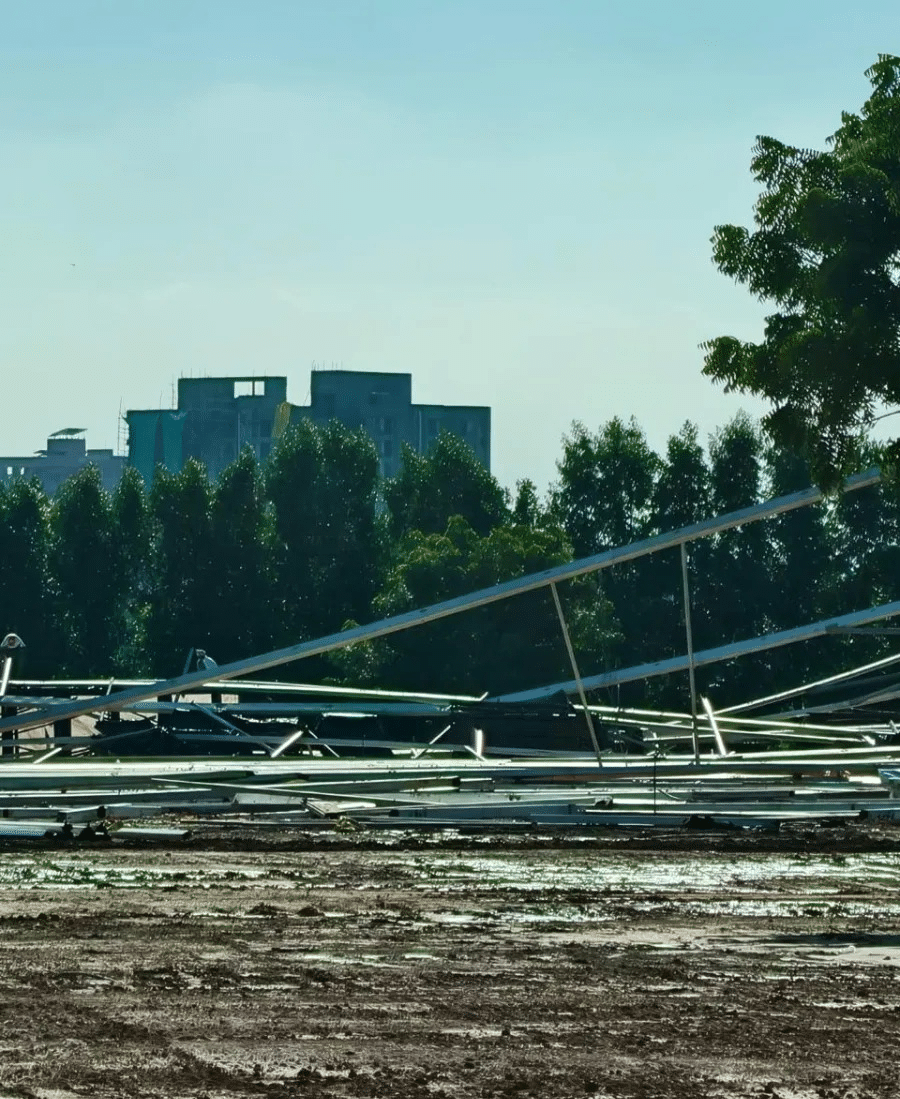
THE ISSUE IN ONE LINE: A reported collapse of a 60 m wide temporary German Hangar structure at GIFT City, Gandhinagar, raises questions not only about one installation, but about how India designs, supplies, erects, certifies and inspects large temporary structures used by the public.
The reported collapse in the early hours of 18 September 2026 has drawn attention to an important question for India’s rapidly growing events and exhibitions industry: are the systems used to design, erect, certify and inspect large temporary structures keeping pace with the scale of events being hosted?
THAT DISTINCTION IS IMPORTANT: A structural failure should be examined through engineering evidence, site records, approved drawings, material documentation, installation records, weather data and independent technical assessment. The incident nevertheless provides a timely opportunity for the industry to examine the larger safety framework around temporary venues.
A temporary structure is still a structural engineering project
The word ‘temporary’ should not be allowed to imply a lower engineering threshold. A German Hangar, large exhibition tent, temporary hall, stage, truss system or covered event venue may stand at a location for only days or months, but during that period it can carry large numbers of people, equipment, lighting, HVAC systems, branding, furniture and other imposed loads.
Its safety is therefore a chain of interdependent decisions:
- Design and structural calculations
- Material selection and traceability
- Fabrication and component quality
- Transportation and handling
- Site conditions and foundations
- Erection methodology
- Anchoring, ballasting and bracing
- Final inspection and certification
- Weather monitoring and operational controls
- Emergency and evacuation procedures
Event & Entertainment Management Association’s Health, Safety & Environment Quick Reference Guide already treats temporary structures—including stages, trusses and tents—as a specific safety area, alongside load calculations, rigging and weather preparedness. Its guide identifies temporary structures, lifting plans, load calculations, wind monitoring and rain contingencies within its HSE framework.
The Gandhinagar questions that require technical answers
1. Did the erected structure match the approved design?
The engineering drawings and calculations should be compared with what was actually erected, including structural members, connections, bracing, roof geometry, cables and anchoring arrangements.
2. What were the actual material specifications?
For aluminium components, the relevant alloy or grade, section dimensions, mechanical properties and manufacturing specifications should be established from procurement and technical records and, where necessary, independent testing.
3. What wind-load assumptions were used?
The engineering basis should identify the design wind speed, exposure, pressure effects, uplift, load combinations and anchoring requirements. These assumptions can then be considered against the actual site and weather conditions.
4. How was the structure anchored?
Anchors, foundations, ballast, bracing and connections are integral to stability. The installed arrangement should be checked against the approved engineering design.
5. What happened during final inspection?
The record should establish who inspected the structure after erection, what was inspected, what documentation was reviewed and who authorised it for use.
Material quality must be established by evidence
Public discussion following the incident has included questions about the aluminium framework and the material supply chain. Those questions should be answered through evidence rather than assumption.
The key point is simple: a material should be assessed against the specification for which it was designed and procured. The investigation should then consider material findings alongside design, connections, anchoring, loading, erection and environmental factors rather than treating any single factor as automatically determinative.
Wind, weather and environmental forces
A temporary structure of a 60 mtr span is the biggest pillarless span currently available in India and presents a substantial exposed span. Wind effects, uplift, anchoring, bracing and site-specific conditions therefore deserve particular attention.
India’s wind-load standard, IS 875 (Part 3):2015, addresses wind loads for buildings and structures. For any specific project, the applicable engineering standard, local requirements and approved design basis need to be identified and reviewed in context.
Certification needs to be understood in context
Temporary structures should generate a substantial volume of certificates and technical documents—structural certificates, stability certificates, wind-load calculations, material certificates, inspection reports and other approvals. Each document needs to be understood for precisely what it certifies.
A certificate relating to a particular material, component, calculation or design assumption should not automatically be interpreted as certification of every aspect of the final structure as erected. The complete safety chain matters.
Where any institutional or academic certification or technical review has been cited in connection with the Gandhinagar structure, the document should be examined to establish its scope, date, assumptions, issuing authority and the specific work covered.
Pre-opening inspection should be treated as a critical control point
The structure should be physically checked against the approved design and critical connections, anchoring, bracing, access routes, fire systems and emergency arrangements should be verified.
For structures above an agreed size or occupancy threshold, the industry could consider an independent pre-opening inspection rather than relying exclusively on the organisation that designed, supplied or erected the structure.
The responsibility of industry associations
Safety is not solely the responsibility of government regulators. Structural engineers, venue operators, organisers, contractors, suppliers and clients all have defined roles. Industry associations also have an important responsibility to build competence, standardise good practice and create mechanisms through which members can learn from incidents.
IESA states among its objectives the promotion of safe working conditions in the event, exhibition and conference services sector, education and training, research and guidance on regulatory developments, and collaboration with other associations. EEMA has already developed a comprehensive HSE framework for events, including specific guidance on temporary structures, load calculations and weather preparedness.
A possible National Temporary Structure Safety Protocol
- Structural Design Certificate — engineering calculations and drawings prepared and signed by a suitably qualified professional.
- Wind & Weather Assessment — site-specific wind and environmental conditions considered in the engineering design.
- Material Traceability — critical structural components supported by identifiable specifications and procurement records.
- Erection Inspection — verification that the installed structure corresponds with the approved drawings and methodology.
- Anchoring Verification — physical inspection and documentation of anchors, foundations, ballast, bracing and connections.
- Independent Pre-Opening Inspection — independent verification for structures above an agreed size or occupancy threshold.
- Weather Monitoring — documented wind, rain and lightning monitoring with predetermined operational thresholds.
- Stop-Work / Evacuation Protocol — clear authority and procedures to suspend operations or evacuate when safety thresholds are reached.
- Digital Safety File — a single record containing drawings, calculations, material certificates, erection records, inspection reports, approvals and photographs.
- Incident & Near-Miss Reporting — an anonymised industry database so lessons can be shared across the sector.Safety must become part of procurement
One of the industry’s biggest opportunities is to move safety upstream into procurement. A project discussion should not begin and end with price, delivery date, aesthetics and capacity. The organiser should also know who designed the structure, what material is being used, who is erecting it, what engineering basis has been adopted, who is inspecting it and who has authority to stop the operation if conditions become unsafe.
The commercial procurement process should therefore recognise engineering competence, documentation, track record, safety systems and independent inspection alongside price and delivery.
Learning from international practice
The need for structured safety systems is not unique to India. International temporary-structure sectors have developed formal guidance covering design, installation, use and dismantling, with competence and independent auditing forming part of some industry schemes. The lesson for India is not to copy another country’s system wholesale, but to develop a practical Indian framework that reflects local codes, climate, approval structures and the realities of the Indian event market.
From Gandhinagar to a national safety framework
The reported Gandhinagar collapse should not become a debate about one contractor, supplier or material before the technical facts are established. The more constructive question is systemic: does India have sufficiently consistent processes for designing, supplying, erecting, inspecting and operating large temporary structures?
India is hosting increasingly large exhibitions, conferences, festivals and corporate gatherings. Temporary infrastructure is becoming more sophisticated and more important to the country’s event economy. The safety framework must evolve with that scale.
The objective should be straightforward: a large temporary structure should open to the public only after its design, materials, installation, stability, anchoring, weather preparedness and emergency arrangements have been appropriately verified.
“The real legacy of Gandhinagar should not be another debate about who is responsible. It should be an industry-wide decision that safety is engineered into every major temporary structure before the first visitor enters it.”
Editorial note
This article is a research and industry-analysis piece. The incident details described above are based on public reports available as of 25 September 2026 and remain subject to independent verification. Any allegations concerning contractual relationships, material quality or certification should be established through official records, technical investigation and independent evidence.
Disclaimer : The reporting reviewed for this article does not establish the technical cause of the collapse. Accordingly, this article does not attribute the incident to any contractor, supplier, material, engineering decision or weather condition.