

Sustainability in Events: The New Benchmark for India’s Exhibition Industry
By Sadaf Rizvi

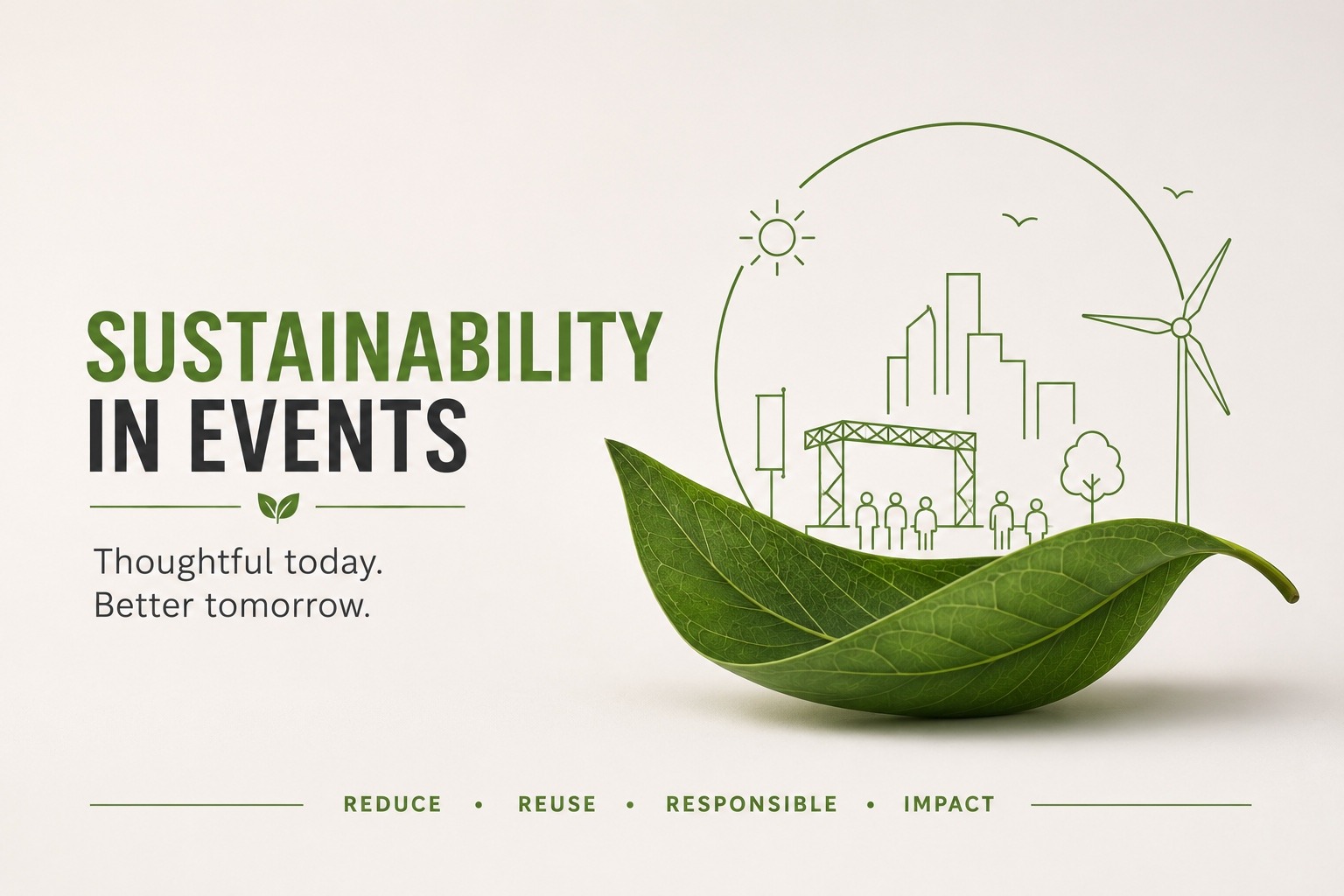
 Sustainability has moved well beyond being a corporate buzzword. In today’s exhibition and events industry, it is becoming a defining factor in how events are designed, delivered and evaluated. What was once limited to eliminating plastic bottles or reducing printed brochures has evolved into a much broader commitment that influences venue selection, exhibitor participation, supply chains and long-term business strategy.
India’s exhibition industry is at a particularly exciting juncture. With world-class venues such as Bharat Mandapam in New Delhi and Yashobhoomi, coupled with the country’s growing prominence as a global MICE destination, organisers are increasingly expected to deliver events that are not only commercially successful but also environmentally and socially responsible. Sustainability is no longer an add-on. It is becoming an expectation from clients, exhibitors, sponsors and visitors alike.
One of the most significant shifts is the move towards circular event design. Across leading trade fairs, organisers are replacing disposable exhibition infrastructure with modular stands, reusable signage, recyclable carpeting and lightweight aluminium systems that can be repurposed across multiple editions. These changes reduce waste generation while offering better long-term value for exhibitors who participate in multiple events throughout the year.
Technology has also emerged as a powerful sustainability enabler. Digital registrations, mobile event apps, QR code-based catalogues, AI-powered networking platforms and smart visitor analytics have considerably reduced the industry’s dependence on printed collateral. Beyond lowering paper consumption, these digital solutions improve visitor engagement and provide organisers with actionable insights that help optimise future events.
The conversation is also expanding to carbon management. While venue operations are becoming more energy efficient, industry leaders are increasingly recognising that exhibitor logistics, freight movement and delegate travel account for a significant share of an exhibition’s carbon footprint. As a result, many organisers are encouraging local sourcing, consolidated freight movement and partnerships with vendors who follow sustainable procurement practices. Food waste management, waste segregation and donations of surplus catering are gradually becoming part of responsible event operations rather than isolated initiatives.
At flagship events hosted at Bharat Mandapam, sustainability is increasingly being discussed alongside innovation, infrastructure and business growth, highlighting that the future competitiveness of the industry will depend on responsible event management as much as commercial success.
Equally important is the shift from environmental sustainability to ESG-led event planning. Accessibility, diversity, ethical sourcing, local community engagement and employee well-being are becoming integral to how successful events are measured. Today’s stakeholders expect transparency, and they can easily distinguish between meaningful sustainability initiatives and superficial green marketing.
Events such as Bharat Tex have demonstrated how sustainability can be embedded into an exhibition’s core narrative by showcasing circular textiles, responsible manufacturing and traditional crafts that promote sustainable livelihoods alongside business opportunities. Such examples underline the fact that sustainability is no longer separate from business growth. It is becoming central to it.
The future of India’s exhibition industry will belong to organisers who embed sustainability into every stage of the event lifecycle, from planning and procurement to execution and post-event reporting. The most successful exhibitions will not simply be remembered for their scale or visitor numbers, but for the positive and measurable impact they leave on businesses, communities and the environment. In an increasingly conscious marketplace, sustainability is no longer the future of events. It is the new benchmark for excellence.