Five Trade Show Truths Every Exhibitor Should Know Before Exhibiting
By Richard Erschik


 After more than fifty years in the trade show industry, training over 45,000 exhibiting professionals, speaking at more than 350 conferences and workshops, and helping companies process more than one million trade show sales leads, I’ve reached one simple conclusion.
- Trade shows are not broken. The exhibiting process is.
That may sound like a bold statement, but I’ve watched companies invest hundreds of thousands—and sometimes millions—of dollars in trade shows while unknowingly sabotaging their own return on investment.
The irony is that trade shows remain one of the most powerful forms of business-to-business marketing ever created. Buyers voluntarily come to sellers. Few other marketing channels offer that advantage. Yet countless companies still question whether exhibiting is worth the investment.
- The problem isn’t the show. It’s what happens before, during, and especially after the show.
One of the biggest misconceptions in the industry is that exhibitors have a lead generation problem. In my experience, they don’t. They have a lead follow-up problem.
Companies spend months planning their exhibit. They invest heavily in booth space, travel, staffing, shipping, and promotions. They celebrate the number of badge scans collected and the traffic through their booth. Then they return home and, far too often, allow those opportunities to quietly disappear.
- The leads didn’t fail. The process failed.
Another costly mistake occurs the moment the show closes.
Marketing plans the exhibit. Marketing develops the messaging. Marketing drives booth traffic. Marketing captures the leads. Then marketing hands those leads to sales and hopes for the best.
Hope has never been a business strategy.
During the twenty-two years my company qualified and managed more than one million trade show leads, I learned something that changed my perspective forever.
- Salespeople don’t ignore qualified leads. They ignore names.
There’s an enormous difference between a qualified opportunity and a badge scan. A qualified lead includes context, buying interest, timing, and next steps. A badge scan is simply a name on a list. Expecting the same results from both is one of the most expensive assumptions an exhibitor can make.
Perhaps the greatest misunderstanding in exhibiting is believing that trade show success happens on the show floor. It doesn’t. The show floor creates opportunity. The follow-up process creates revenue.
The companies that consistently outperform their competitors understand that exhibiting is not a three-day event. It’s a business process that begins long before the doors open and continues long after the exhibit hall closes. Ironically, the phase responsible for generating measurable ROI is usually the one that receives the least planning and the fewest resources.
Eventually, every company faces the same question.
After the booth is dismantled and the reports have been presented, someone in the executive suite asks, “How much revenue did we generate?”
Marketing proudly reports booth traffic, demonstrations, and lead counts. Those numbers may sound impressive, but they don’t answer the question that matters most.
- Executives don’t invest in activity. They invest in results.
Organizations that can connect trade show spending to qualified opportunities, sales, and revenue rarely struggle to justify future exhibit budgets.
Over the years, I’ve learned one final lesson that may be the most important of all.
Process beats budget every time.
One client transformed a $450,000 trade show investment into $4.5 million in documented sales. They didn’t buy a larger booth. They didn’t spend more on technology. They simply changed the process.
During twenty-two years of managing more than one million trade show leads, I watched disciplined companies consistently outperform competitors with larger budgets but weaker systems.
The difference wasn’t money. It was methodology.
If there’s one message I’d like every exhibitor, marketing professional, CEO, and CFO to remember, it’s this:
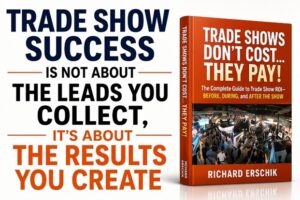
Trade show success is not about the leads you collect. It’s about the results you create.
Companies that focus on process rather than activity don’t simply generate more leads. They convert more opportunities, justify larger budgets, and transform exhibiting from a marketing expense into a measurable business investment.
Because Trade Shows Don’t Cost They Pay.
About the Author: Richard Erschik is a trade show strategist, speaker, trainer, and author with more than 50 years of industry experience. He has trained over 45,000 exhibiting professionals and helped companies process more than one million trade show sales leads. He is the author of Trade Shows Don’t Cost… They PAY!